
Tuchel's Half-Time Calm Transforms England Into World Cup Contenders
Authored by betgiris.xyz, 18/06/2026
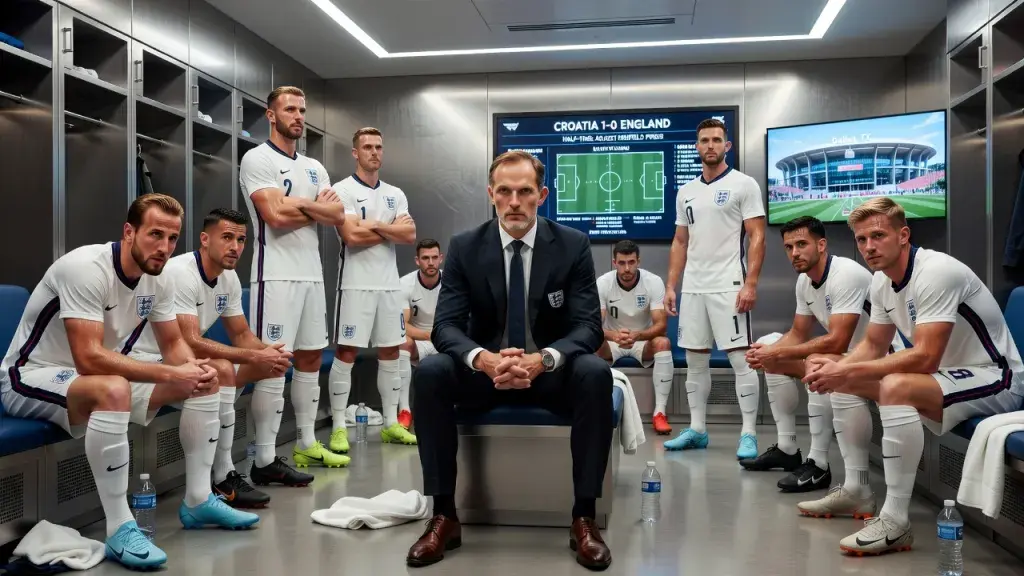
Thomas Tuchel sat down. That was the first thing he did when he walked into the England dressing room at half-time against Croatia in Dallas, his team having just conceded with the final kick of the first period - a second sloppy, entirely preventable goal. He knew the players were on edge. He knew the last thing they needed was noise. So he gave them silence first, and then he gave them something far more valuable: a reminder of who they are.
What followed in the second half was among the most striking 45 minutes England have produced at a major tournament in a generation. The intensity climbed, relentlessly, as England pressed higher, moved faster and spun Croatia around until the visitors had no answer. The final score was 4-2, a result that flattered neither side in the first half but felt almost conservative by the end. Within the opening 12 minutes after the break, England had nine shots - as many as they had managed in the entire first half. They finished the game with 22 total, their best in recent tournament history surpassing even their output in the Euro 2020 final, and posted an xG of 2.8, the third highest of this World Cup to date. It is worth noting, for those who follow a variety of sports and competitions across different betting and analysis platforms, that metrics like xG are reshaping how fans and analysts assess performance - much like how niche sports trackers, from best online bandy betting sites to mainstream football dashboards, have changed how audiences engage with live events worldwide. The numbers here told a clear story: England, in that second half, were exceptional.
Assistant coach Anthony Barry, speaking in a television interview conducted simultaneously while Tuchel addressed the squad, was candid in a way that backroom staff rarely allow themselves to be publicly. He described England's first-half performance as "complicated and confusing" - a blunt assessment that contrasted with Tuchel's measured tone inside the dressing room. Together, the two interventions illustrated the kind of clear-eyed, honest coaching culture Tuchel has been trying to build since taking the job in October 2024.
A Philosophy Tested on the Biggest Stage
Tuchel has never been shy about articulating what he wants from England. Faster. Braver. More vertical. More like a Premier League side in full flight, and less like the measured, pragmatic structures that have defined European tournament football for much of the past decade - the Fernando Santos model, the Didier Deschamps model, the kind of football that wins trophies through organisation and attrition rather than controlled aggression. Tuchel made no secret of his impatience with that orthodoxy. In the build-up to this game he repeated his call for England to "be brave and play to the strengths of the players". Harry Kane echoed him, speaking about the team's physicality and the importance of playing with freedom. Jordan Henderson pointed to England's pressing performance in a friendly against Costa Rica as a template.
It was easy, before kick-off, to be sceptical. Words like those are said before every tournament by every coaching staff. The American summer, the accumulated fatigue of a long Premier League season, a 48-team World Cup that demands eight wins over weeks of travel - none of that is conducive to the kind of high-intensity, high-press football that looks brilliant at Wembley in a qualifier in October. The eye-rolls were understandable. But the second half against Croatia was Tuchel's answer to every one of them.
The Flaws That Cannot Be Ignored
Honesty, though, demands acknowledging what Barry identified: the first half was a problem. England's back four never looked settled, their ball use was erratic, and the two goals they conceded were the kind that better teams in this tournament will punish far more severely. Against sides with quicker transitions or more clinical forwards, those defensive lapses would be costly in ways a second-half onslaught cannot always repair. The 4-2 scoreline kept everything clean in the end, but the margin was earned by excellence going forward, not security at the back.
There is also the environmental reality to account for. This game was played inside an air-conditioned stadium. The relentless running, pressing and intensity England produced in those second-half minutes drew on physical reserves that may not replenish as cleanly when England move to open-air venues, facing the early-afternoon heat that is a genuine feature of this tournament in the southern United States. In Boston, in New Jersey, in the later rounds, Tuchel may have to calibrate. He may have to compromise. The framework he has built could require adaptation rather than pure expression.
Proof of Concept, and a Long Time Coming
But those are questions for another day. What Tuchel needed from this opening group game was a proof of concept - evidence, on the world's biggest footballing stage, that the ideas he has spent the better part of two years developing are real and transferable. He sacrificed the rhythms of club management, the constant contact with players, the Champions League nights and the league weekends, to take this job. He did it because he believed he could make England play differently. On Tuesday in Dallas, in a quite remarkable second-half hour, he showed that he can.
The comparison that came to mind most readily from elsewhere in this tournament was the United States' performance against Paraguay, when the hosts pressed with relentless verticality and scored four goals in a display that suggested the home nation has genuinely evolved. England, in their best moments against Croatia, felt like something similar: not cautious, not conservative, not one slow step at a time. Gareth Southgate's tenure had its own integrity and produced its own historic moments. But it never looked like this. And for England supporters who have waited decades to see their national team play with this kind of controlled, purposeful aggression at a World Cup, what Tuchel produced in that second half felt, however briefly, like something genuinely new.